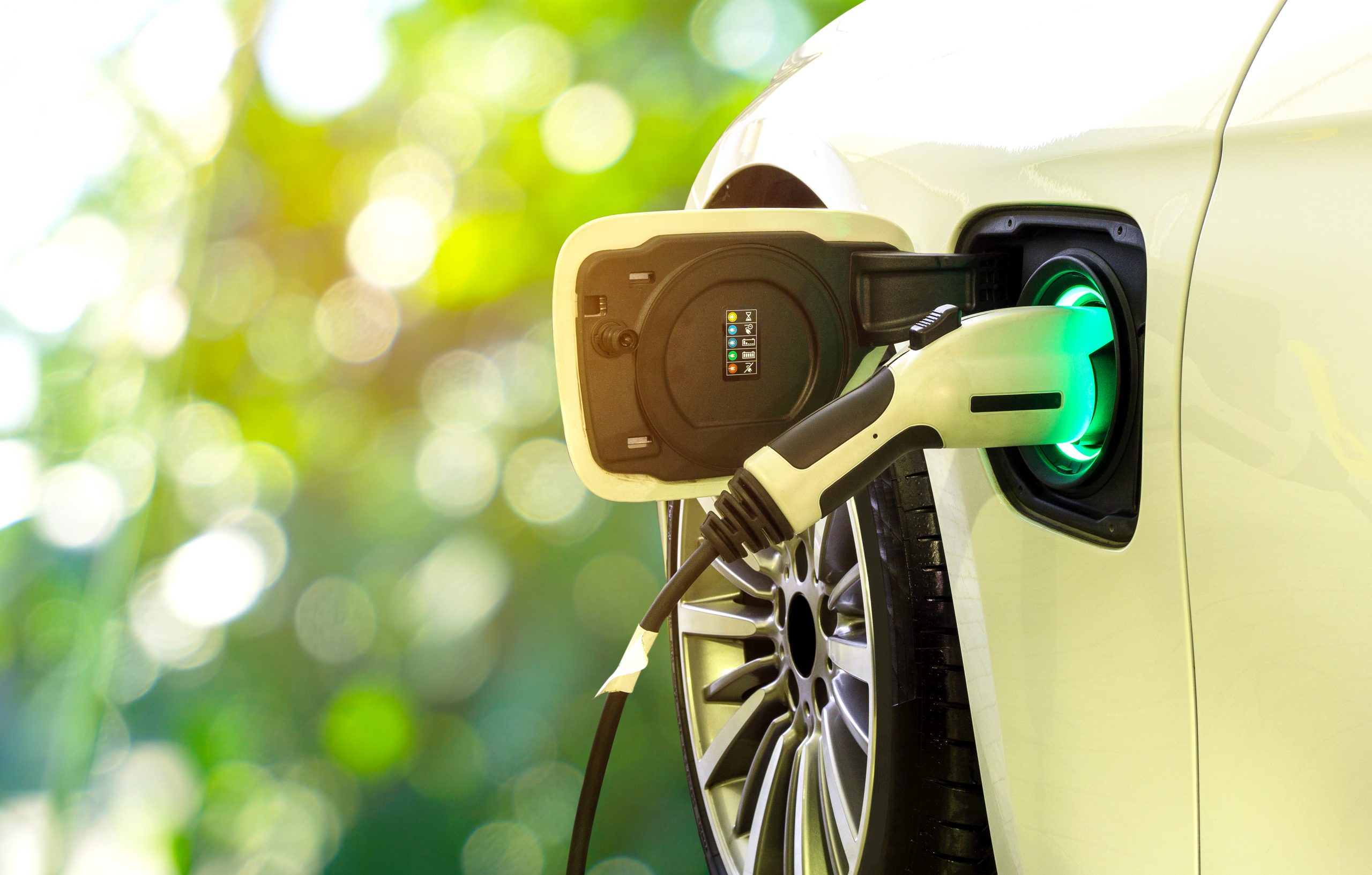
If not a permanent magnet motor, then what?

HISTORY OF PERMANENT MAGNET MOTORS

The electric vehicle industry has been built on these motors

Permanent magnet machines have been the traction motor of choice for OEMs since the first modern electrified vehicles hit the roads in the late 1990s. At that time, engineers favoured the permanent magnet motor for its efficiency, relative power density and simplicity, and since then an entire electric vehicle industry has grown up around these machines.

The engineers working on those early hybrid vehicles couldn’t have foreseen the issues that mass production of EVs containing permanent magnet motors could cause. Nor could they predict our insatiable need for personal electronics and the pressures these two trends would place on rare earth metal production or levels of electronic waste.

THE PROBLEMS

Permanent magnet motors are environmentally and financially unsustainable

But now we do know the realities of mass-producing permanent magnet traction motors for a burgeoning electric vehicle industry. For each permanent magnet traction motor produced, around 2kg of rare earth material is needed, costing around $200 – although that price is incredibly volatile (it increased 240% in the year up to March 2021).

That means that the production of each traction motor can create around 3kg of radioactive waste and up to 56kg of CO2. Those worrisome figures only become worse when you consider that some forecasts suggest we’ll be producing 128 million EVs per year within the next 20 years. Shockingly, if rare earth metal production keeps pace with this growth, it could be producing enough acidic sewage to fill an additional 21,000 Olympic-sized swimming pools every year.

ALTERNATIVE SOLUTIONS

So far attempts to remove magnets has meant a compromise on performance and range

So, it’s clear that a different, magnet-free solution is needed for EV traction motors, and fast. But there’s a good reason permanent magnet machines have been favoured over other existing motor technologies so far.

True, some vehicle manufacturers have incorporated induction motors into their electric cars instead, but the result of using this less power-dense solution has meant heavier vehicles and less predictable real-world range.

AEM’S TECHNOLOGY

A new motor technology that is more sustainable, more efficient and higher performing

That’s where AEM’s technology comes in. A semi-sinusoidal machine, AEM’s technology changes how electricity is fed into the coil and swaps the permanent magnets in the rotor for electrical steel.

The result is a motor that is not only more sustainable to produce and dispose of than the permanent magnet machine, it is also more efficient and power dense, while even providing significant safety benefits.

So you see, there really is an alternative to the permanent magnet motor that not only provides performance advantages, but stops us from falling into yet another environmental trap for future generations.


Faster, Further, Lower Cost, Greener

Why AEM’s motors outperform the rest of the market

AEM’S UNIQUE MOTOR TECHNOLOGIES

Background

AEM’s electric motors are unlike anything else on the market, offering a unique approach to achieving sustainable traction. HDSRM and SSRD traction motors eliminate rare earths, are uniquely recyclable and offer vehicle range improvements over competitors.

This blog describes how AEM’s motors allow customers to go Faster and Further whilst being Lower Cost and Greener.

FASTER

How AEM’s high speed motor technology enables very high-performance vehicles

AEM’s SSRD traction motor is designed to operate at 30,000 revolutions per minute, significantly faster than any motor currently in volume automotive production.

This rotational speed was originally selected as it was shown to form the basis for the most cost-effective possible EV powertrain, however experience has now shown that it can also enable the world’s highest performance electric cars.

Work with partner Bentley has shown that SSRD will allow a high-performance electric vehicle to operate up to the highest speeds without a need for a complex transmission. Removing the transmission makes the vehicle lighter and increases acceleration, to further key components of the highest performance vehicles.

FURTHER

How AEM’s traction technology allows AEM powered vehicles to go further on a single charge

A major commercial vehicle customer has reported that the expect AEM’s HDSRM commercial vehicle traction motor to increase their vehicle range by 10%.

A major passenger vehicle OEM has reported that AEM’s SSRD traction motor will extend their cars range by 15%.

Based on AEM’s modelling and testing to date, this increase in range can be attributed to several key technology factors:

  • AEM’s fundamental motor technology has inherent efficiency advantages through their physics, this is coupled with a trade secret design approach which optimises the motors to meet specific customer’s needs
  • AEM’s compressed aluminium windings reduce high speed losses in the motor, allowing the motor to operate efficiently across the full speed range
  • AEM’s ‘efficiency boost’ technology, used in dual motor systems, allows a single motor to be switched off when it is efficient to do so; this has the effect of significantly increasing the peak efficiency region of powertrain operation

LOWER COST

Why AEM’s Motor technology is inherently lower cost than the competition

Simply put, AEM’s motors eliminate the need for the two most expensive materials used in motor manufacturing; rare earth magnets and copper. As well as achieving the sustainability benefits of eliminating these materials, lowest manufacturing cost is also a significant benefit.

Rare earth magnets are the single most expensive material in a motor, with around 2kg used in a standard traction motor and costing around $100/kg as a base price. Rare earth price volatility however means that even higher base costs can be driven by market forces. However, the benefits go further than this; magnets are very challenging to handle during manufacture. Metals particles want to stick to them, hands may be injured between them, and other metals want to be magnetised by them (potentially ruining production equipment). AEM’s technology eliminates all of these problems.

Further, use of AEM’s compressed aluminium conductors reduces motor conductor costs by circa 90%.

Additionally, there are even greater benefits. AEM’s motors are designed to reduce the overall cost of the electric powertrain. The SSRD motor was initially developed as part of a programme called “Low Cost Electric Drivetrain”, designed to reduce not just the cost of the motor but the system overall. Additional savings are made by ensuring that the motor can:

  • Be driven by cost effective power electronics; SSRD uses at least as cost-effective power electronics as the industry standard interior permanent magnet motor
  • Reduce the size of the battery needed to drive the vehicle; as has already been discussed under “Further” in this blog AEM’s motors offer the potential for up to 15% increase in vehicle range
  • Operate with a lower complexity and therefore lower cost transmission; SSRD is designed to work with a simple, low cost transmission as is discussed under “Faster”.

GREENER

How AEM’s motors are designed to be the world’s most sustainable

AEM was founded in order to develop electric motor solutions which offer true environmental sustainability, something not currently offered in the market.

To achieve this AEM has taken a number of steps in order to make it products as sustainable as possible:

  • HDSRM and SSRD products do not use rare earth magnets, removing the single least sustainable material from the electric motor
  • In production, HEAD will use recycled rare earth magnets; recovered from scrap sources such as used hard disk drives, these magnets are recycled to minimise environmental footprint
  • All motors will use Aluminium Motor windings; this dramatically improves motor recyclability at the end of vehicle life by allowing the motor to be recycled as part of the standard steel recycling root. This is impossible for conventional motors as copper is a contaminant in the steel recycling process
  • AEM seeks ways to improve the sustainability of its operations. For example, waste heat is recovered from motor validation testing in order to heat the AEM factory unit

COP 26: Making power electronics more sustainable

Professor Mark Johnson graduated from the University of Cambridge with a bachelor’s degree in Engineering in 1986. Since then, it’s fair to say he’s put that qualification to effective use. Mark led the UK academic community, as Director of the EPSRC Centre for Power Electronics and was leader of the Advanced Propulsion Centre Power Electronics Spoke. He is Power Electronics Director for AEM and holds a personal Chair at the University of Nottingham.

Mark’s personal research expertise is in power devices, power electronics packaging, thermal management, reliability and integration. He also has considerable experience of managing large and complex technical projects involving industry and academic partners.

In his thought-provoking address at our COP26 event, Mark will lift the lid on the challenges the automotive sector faces when it comes to producing power electronics systems that are sustainable, affordable and resilient.

Setting out this extremely complex issue in layman’s terms, Mark will explain the critical function performed by power electronics in electric vehicle powertrains, before considering the rapid scale-up in production that is required over the coming decade.

This presentation will demonstrate that not all EV powertrains are made equal, and not all EVs are truly ‘green’ at all. Until rare earth mining practices are stopped, and a more serious approach to recycling is adopted, the production of power electronics will continue to contribute to the mounting global e-waste issue.

Mark believes, however, that with some innovation and commitment, the power electronics systems of the future can be sustainable, cost-effective, and produced in the volumes the industry needs.

For ideas from some of the automotive and engineering sectors’ brightest minds, be sure to join us for N.EAST at 15:00 on 10 November at COP26 in Glasgow or virtually via COP26’s YouTube live channel.

Understanding sustainability in the CV sector with David Thackray, Sales & Marketing Director at Tevva

Working with Tevva since 2016 to bring its ground-breaking truck to the UK and Europe, David Thackray’s experience spans road haulage contracting, international strategy consulting and market research.

With a Master’s in Business Administration, a transport manager’s license and a current Class 1 HGV licence; David combines a theoretical and practical understanding of the disparate pressures and requirements faced by fleets. This makes him uniquely qualified to demonstrate how the environmental, operational and commercial imperatives of de-carbonising road transport can be simultaneously satisfied.

In light of this, David Thackray will be speaking at our COP26 event, Novel Electrification through Advanced Sustainable Technologies (N.EAST), on 10 November 2021. In this session, David will provide a high-level overview of the electric truck market and discuss the latest trends, technologies and innovations in the sector which are key to making the commercial vehicle industry truly sustainable.

Last year, the global electric truck market was valued at $1.15 billion and is expected to grow to $14.19 billion by 2027 and with the United Kingdom and Europe committed to a target of net zero emissions by 2050. Earlier this year, Tevva launched its BEV – the first British-built 7.5-tonne electric truck intended for mass production in the UK, positioning Britain as a global leader in the electric truck revolution.

David is uniquely positioned to address the importance of making the whole supply chain economically sustainable. He has a thorough understanding of how today’s technology is transforming the electric vehicle sector to become safer, greener and more efficient.

For ideas from some of the automotive and engineering sectors’ brightest minds, be sure to join us for N.EAST at 15:00 on 10 November at COP26 in Glasgow or virtually via COP26’s YouTube live channel.

James on the Fully Charged Podcast

Our very own James Widmer, Founder and CEO of Advanced Electric Machines, talks all things electric motors with Robert Llewellyn on the Fully Charged Podcast. In this episode James explains what is actually inside them, the common misunderstandings and how to think even bigger when it comes to the sustainability of electric vehicles.

Video link: https://www.youtube.com/watch?v=WdpLhmdd_eA&t=2306s

COP 26: making EV motors be faster, travel further and be greener

When James Widmer took up his PhD at Newcastle University, he could never have known that less than ten years later he would have developed a technology with the potential to save the world. However, that’s how AEM’s unique, highly sustainable EV motor technology got its start, and how the now Prof Widmer came to be AEM’s founder and CEO.

In developing this technology, James – and in time a team of AEM engineers – knew that a truly sustainable EV motor had to make improvements to existing technology in several areas. Not only did it have to clean up the EV motor supply chain and be easily recycled, it also needed to be more efficient and better performing in the vehicle. In short, it needed to be faster, travel further and be greener than the internal combustion engine technology it was replacing.

An entirely new technology, AEM’s motor does away with rare earth magnets and copper, which is crucial when it comes to addressing all three of the criteria it needs to meet.

By not using magnets in the motor’s rotor, for example, AEM is able to let the motor spin faster as it does not lose performance at the higher temperatures this generates. Unlike traditional motors, it is also able to ‘coast’, meaning that it uses less power when the vehicle is maintaining a steady speed or decelerating. These are both characteristics that allow for a more efficient motor.

Meanwhile, its green credentials are clear. By not using rare earth magnets, AEM is not relying on a problematic and volatile supply chain. (You can find out just how damaging rare earth mining can be to the environment by reading our previous blog, COP26: Creating a sustainable passenger car solution).

By removing copper from the motor’s stator and replacing it with aluminium, AEM is also making the motor easier to recycle at end of life. Rather than copper needing to be removed by hand before the casing is recycled, the whole AEM motor can be smelted as scrap, with the steel and aluminium separating naturally.

For ideas from some of the automotive and engineering sectors’ brightest minds, be sure to join us for N.EAST at 15:00 on 10 November at COP26 in Glasgow or virtually via COP26’s YouTube live channel.

COP 26: creating a sustainable passenger car solution

Before joining AEM as Chairman in March 2021, Peter Fleet had already enjoyed a highly successful 30-year career at Ford Motor Company. Having most recently held the role of Group Vice President and President of Asia Pacific, Peter has an encyclopaedic knowledge and understanding of the global automotive sector.

That’s why on 10 November, Peter will talk at our COP26 event, Novel Electrification through Advanced Sustainable Technologies (N.EAST), about the changing passenger car market, and what the industry needs to do to make the sector truly sustainable.

By 2030, Deloitte estimates that more than 90% of global passenger car and light commercial vehicle production will consist of electric vehicles (EVs). While this is clearly a step in the right direction when it comes to decarbonising road transport, it does not solve the sustainability issues around passenger cars in its entirety.

Much has been said about sustainability concerns around EV batteries, but similar issues must also be raised about EV motors as well.

Ever since the first hybrid cars came to market, electrified vehicles have traditionally been driven by permanent magnet (PM) motors. As the EV market gathered pace, PM motors became the de facto solution, and the supply chain built itself around this technology.

But PM motors have a number of characteristics that threaten to undo much of the good work that the automotive sector is doing around decarbonisation.

Firstly, the rare earth materials used in the magnets of PM motors are highly damaging when mined and processes. Every tonne of rare earth material taken from the ground produces up to 1.4 tonnes of radioactive waste, 200m3 of acid-containing sewage water, 60,000m3 waste gas containing hydrochloric acid and 27.6 tonnes of CO2.

The pricing of these materials is also highly volatile, making it difficult for manufacturers to accurately predict the cost of scaling PM motor technology to the many millions needed by 2030.

Meanwhile, PM motors are costly and inefficient to recycle owing to the use of magnets and copper.

So, the question remains, how do we make EVs truly sustainable, in time for mass global adoption in the passenger car market?

For ideas from some of the automotive and engineering sectors’ brightest minds, be sure to join us for N.EAST at 15:00 on 10 November at COP26 in Glasgow or virtually via COP26’s YouTube live channel.

Making rare earth materials as sustainable as possible

Rare earth magnets are increasing in demand as we shift to a zero-carbon economy, and electric vehicles especially use a lot of magnets. Currently, less than 1% of these magnets are actually recycled, so as the demand for them increases, as does the scale of extraction and processing of the rare earth materials, which is creating huge environmental issues.

RaRE is a project underway at Advanced Electric Machines that has set out to answer: how do we extract rare earth materials from waste electronics and recycle them back into magnets to be used in motors, and do we do this in a sustainable way? 

Why?

There are a considerable number of individual magnets in the non-drive mechanisms in a car. Many of these magnets are tiny, so they cannot easily be replaced with magnet-free technology. The question then becomes, how do we make these irreplaceable magnets as sustainable as possible?

For all the time and effort invested, recycling rare earth materials has been broadly unsuccessful. The current process is to either melt magnets back to a master alloy or use solvent extraction to extract rare earth materials. Not only are these processes energy-intensive, but they also require magnets to be separate from other components in the motor housing, which often isn’t the case. With a limited supply available, manufacturers are looking for a more practical and cost-effective way of operating systems using magnet-based technology.

Working with the leader in magnet recycling and manufacturing, HyProMag, and the University of Birmingham, our goal is to broaden the range of scrap for the extraction of magnets and scale-up the extraction and recycling processes to make as many motor technologies as sustainable as possible.

The recycled magnets will be used in the bespoke ancillary motors designed and manufactured by AEM, and applied by Bentley Motors. Unipart will then develop a scalable manufacturing route for the volume production of this design. 

The Opportunities

There are currently no motor designs on the market using recycled rare earth materials. Aside from making this an industry first, there are broader opportunities from the outcome of the RaRE project.

For instance, the scrap separation process that will be developed has applications within both global waste handling and waste handling facility designs. There are also benefits for recycled rare earth production facilities from the models of scrap processing and magnet manufacturing that will be developed, and all these processes and materials will be applicable across several sectors, creating a huge number of opportunities in different applications.

These outcomes from RaRE will present an opportunity to create a competitive advantage for UK motor manufacturing by developing a differentiated supply chain for motors and power electronics, which is expected to grow to £5 billion by 2025. The cost-effective production of magnetic materials could turn the UK into an exporter of magnets for tractions motors and inherently protect the UK from future supply issues. 

Our Solution

The University of Birmingham developed its patented Hydrogen Processing of Magnet Scrap method for use with neodymium iron boron (NdFeB) magnets. This process reduces these types of magnets to a de-magnetised powder that can be mechanically removed from a component. The powder is then purified and remanufactured by resintering, where it is compacted into a solid form using heat or pressure.

This solution allows the extraction of magnets from a wide variety of sources, from automotive products to loudspeakers and hard disk drives, creating immense scale-up opportunities for the project.

AEM are also developing prototype motor designs that have been optimised to use these recycled rare earths whilst meeting the high performance and reliability criteria required by vehicle manufacturers.

Read the RaRE press release: https://advancedelectricmachines.com/new-bentley-motors-project-announcement/

Delivering a compact, integrated, and cost-effective E-Axle with Bentley

AEM’s OCTOPUS project will deliver an E-Axle, free of rare earth materials, that uses next-generation integrated power electronics to create marketing-leading power density and packaging characteristics in line with Bentley’s needs.

We’ve previously worked with Bentley on the APEX motor technology project, and the OCTOPUS project builds on this work by applying leading-edge materials and manufacturing processes to push performance characteristics beyond APEX.


Why?

Delivering the ultimate passenger car E-Axle solution is a challenge that touches many issues: sustainability, rare earth material supply issues, CO2 emissions in production, CO2 emissions in use and recyclability at the end of life.

The key issues to address are four-fold:

  • How do we extract rare earth materials sustainably?
  • How do we put together the materials?
  • How efficiently can we put together these materials?
  • When we’re finished with those materials, how do we make sure we dispose of them in the most sustainable way?


The OCTOPUS Project

The OCTOPUS project sees us apply a cutting-edge approach to an iconic UK brand — and no manufacturer is more demanding than Bentley. But our goal is not simply to narrow its application to best-in-class performance vehicles. This is a technology that can be applied to all vehicles — not just the 0.1%.

The simulation toolkit, test programmes and test rigs can be applied to the automotive and broader transport markets. These can be developed to become vital assets to other automotive organisations leading the development of electrification technologies. The wire production methodology and additive manufacturing process routes developed through the OCTOPUS project will also be suitable for use in the wider component manufacturing market.

Partners on the project include AEM, TTPi, Hieta, Talga, Hartree, Diamond Light Source, University of Bath and Bentley Motors.


The Solution

AEM aims to use everything available in the market in the best way to deliver a world-changing technology solution and push performance characteristics beyond those of the APEX project. The result is an E-Axle solution that is more power-dense, more manufacturable and has stronger performance characteristics.

To achieve this, we used Europe’s largest supercomputer network, one of the world’s largest microscopes and world-leading test and validation. We also brought together the latest carbon-based super materials — graphene and carbon monotube — with traditional materials thinking. The solution has reduced costs and footprint by applying leading-edge materials and manufacturing processes to remove rare earth materials and copper from the process.

From this, we developed a cutting-edge manufacturing process working alongside traditional manufacturing to deliver an integrated solution that reduces the system’s overall manufacturing and assembly costs. The new manufacturing processes can be energy-intensive, and so we only use the technology when necessary. 

By using the installed asset base of the UK’s advanced manufacturing capability, manufacturers don’t have to spend millions on new tech and redesign processes and systems that already deliver low-cost economies. This also helps secure manufacturing jobs in the UK and encourages retraining of employees.

There are also wider opportunities for partners to become involved in developing an end-to-end supply chain, providing an opening for using the technology in sectors beyond automotive. AEM has developed a truly sustainable solution to future transports that is world-leading in its performance, cost and recyclability. 


Keen to learn more? Stay tuned in to find out how it’s going.

More about AEM’s passenger car applications: https://advancedelectricmachines.com/applications/passenger-car/

Read the OCTOPUS press release: https://www.bentleymedia.com/en/newsitem/1128-bentley-motors-looks-to-the-future-of-electric-drive

Delivering sustainable and reliable electrification of agricultural vehicles

AEM’s ElecTra project will make the UK a leader in the electrification of agriculture by delivering an integrated, cost-effective hybrid powertrain optimised for the agricultural sector’s needs.

We’ve partnered with CNH Industrial, home to some of the world’s most innovative agricultural machinery brands and the leader in the Dow Jones Sustainability Indices, World and Europe for machinery and electrical equipment for the last decade.

Why?

ElecTra is one of the most challenging projects in terms of electrification. 

Globally, governments and industry are looking to find ways for more sustainable food production and agriculture while dealing with the threats of market instability and climate change. Addressing this challenge goes to the heart of the issue of sustainability in food production.

There is also the issue of use cycles in the agricultural industry.

While a consumer vehicle sits idle for most of the day after being used for only an hour or so, heavy-duty agricultural vehicles need to be in service for up to 16 hours every day during sowing and harvesting periods. The lack of reliability of current technology has a significant and immediate cost impact on the income and security of our food sources. That’s why the solution has to be practical and credible and demand reliability for the industry.

In many ways, the electrification of agriculture is the ultimate test for the electrification industry. Agriculture is one of the largest industrial producers of greenhouse gases. Therefore, the journey to net zero in farming and agriculture will not be a single step but a series of steps that edge the industry closer to zero-carbon emissions. 

The ElecTra Project and our Partners

Project partners on the ElecTra project include AEM, CNH Industrial, SR Technologies, Semikron and Bath University.

Working with CNH Industrial, our remit looks at all aspects of the journey to zero-carbon food production, from the movement of hay bales to the delivery of food to retailers and distributors. We’re extending the envelope of how much electrification can be used on a farm through our innovation.

The company’s agricultural brands include Case IH, New Holland Agriculture and Steyr for tractors and farming machinery. Its leading-edge technology helps increase the economic viability of farming, maximise density and ensure crops are harvested in optimal commercial conditions. Their AI-powered, self-driving tractors can be programmed to pick crops in ideal conditions, whether to avoid or take advantage of weather or optimal commercial conditions.

CNH Industrial is also home to commercial vehicles brands, such as Iveco trucks and buses, so there is scope for application across these areas as well. The electric motor, transmission, power electronics, VCU hardware/software designs and simulations will all be applicable beyond agriculture, with uses in the off-highway, low-volume commercial vehicle and passenger car markets.

There is also a critical opportunity to de-risk the existing mechanical process and secure crop density and food supply. Currently, the systems used represent a risk, with hydraulic transmission reliant upon oil. The implication of an oil leak during harvesting or sowing can be the removal of entire fields from crop usage for up to two years. Shifting away from these systems and towards electrification helps secure the livelihoods of farmers and the availability of crops.

Addressing the unique challenges of electrifying agricultural vehicles, ElecTra delivers a comprehensive electrification strategy to achieve significant improvements in performance and sustainability. 

Our Solution

The solution focuses on removing rare earth materials from the process, improving the recyclability of materials used, and utilising existing manufacturing processes, whilst also increasing efficiency and performance and reducing costs. 

The development of magnet-free motor technology to drive these systems will replace the traditional mechanical and hydraulic systems with a more sustainable option that retains performance needs. In addition to removing magnets from the systems, the use of the latest wire technology will look to replace copper windings with aluminium to reduce cost and improve recyclability. 

Furthermore, to reduce the environmental impact throughout the manufacturing process, AEM will deliver an innovative design for manufacture, recyclability and re-use to maximise production readiness.

Integration, customization and safety are critical to the agricultural industry. The development of a cost-effective VCU and integration strategy, with existing hardware and software to meet safety standards, will be complemented by flexible “app-based” functionality to support integration with the wider powertrain. An interface enabling a range of apps based on the agricultural sector’s requirements will allow users to optimise efficiency and use precision agriculture analytics for maximum crop yield and quality. 

Keen to learn more? Stay tuned in to find how it’s going.

More about AEM’s off-highway applications: https://advancedelectricmachines.com/applications/off-highway/